

Before and after
What a new front door does to a house.
Four house types most of Britain lives in, each with a door that has done its thirty years. Drag the handle on any of them.
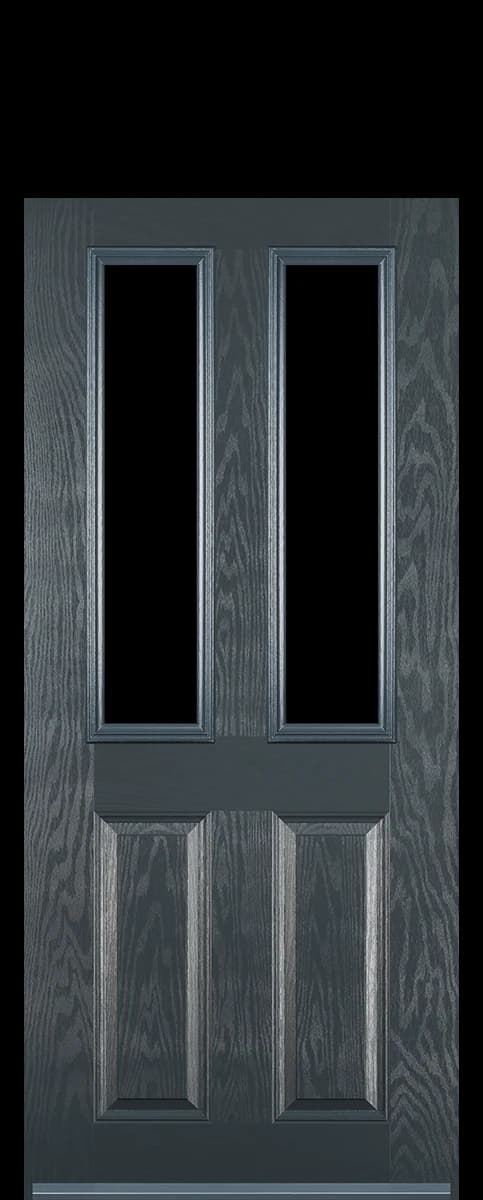
Dunmow in Black
A tired white uPVC door with bubbled glass, on a house whose brickwork and arched head are otherwise original. Black with a single diamond light puts the front back to something the age of the house recognises, and leaves the lower half solid where a terrace door takes the most wear.
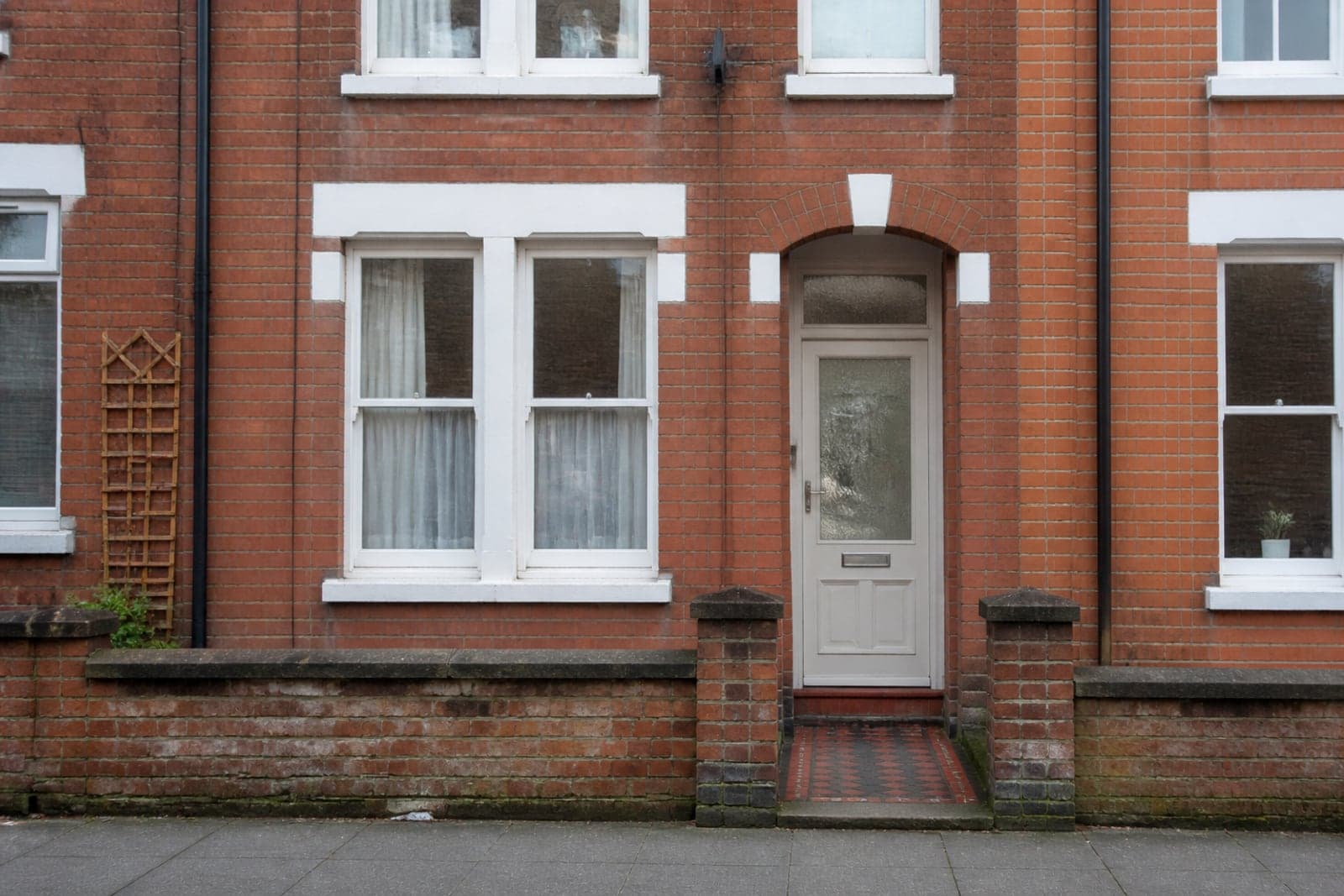 TodayDunmow in Black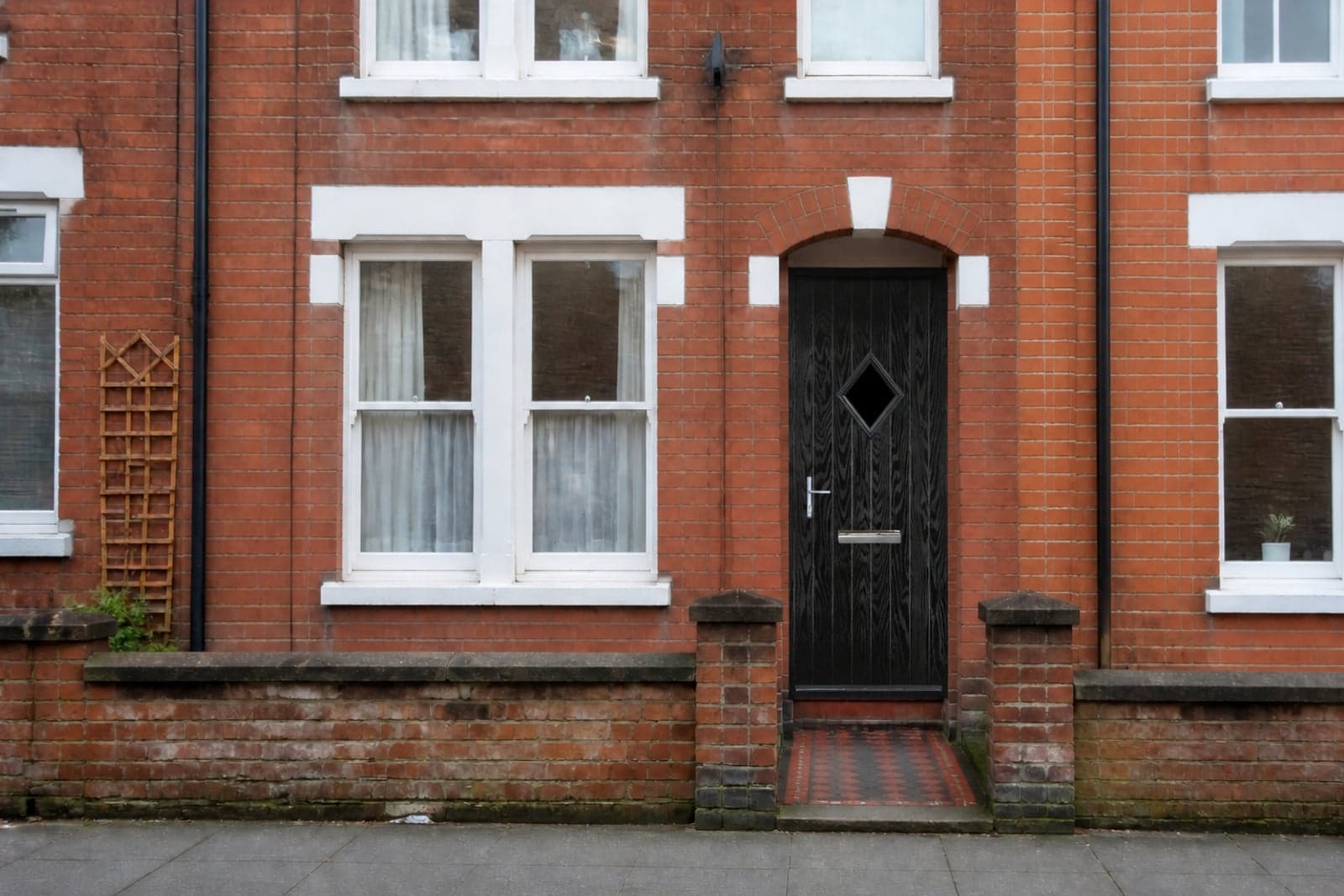
These are demonstrations, not customers.
The houses are generated. The doors are not: each one is a product from the catalogue, put into the picture by the same tool you can point at your own house.
Hartley in Chartwell Green
Stained timber, flaking, with one small dirty pane. Chartwell Green is the colour that sells most on houses of this age, and the two arched lights follow the curve the bay already sets up.
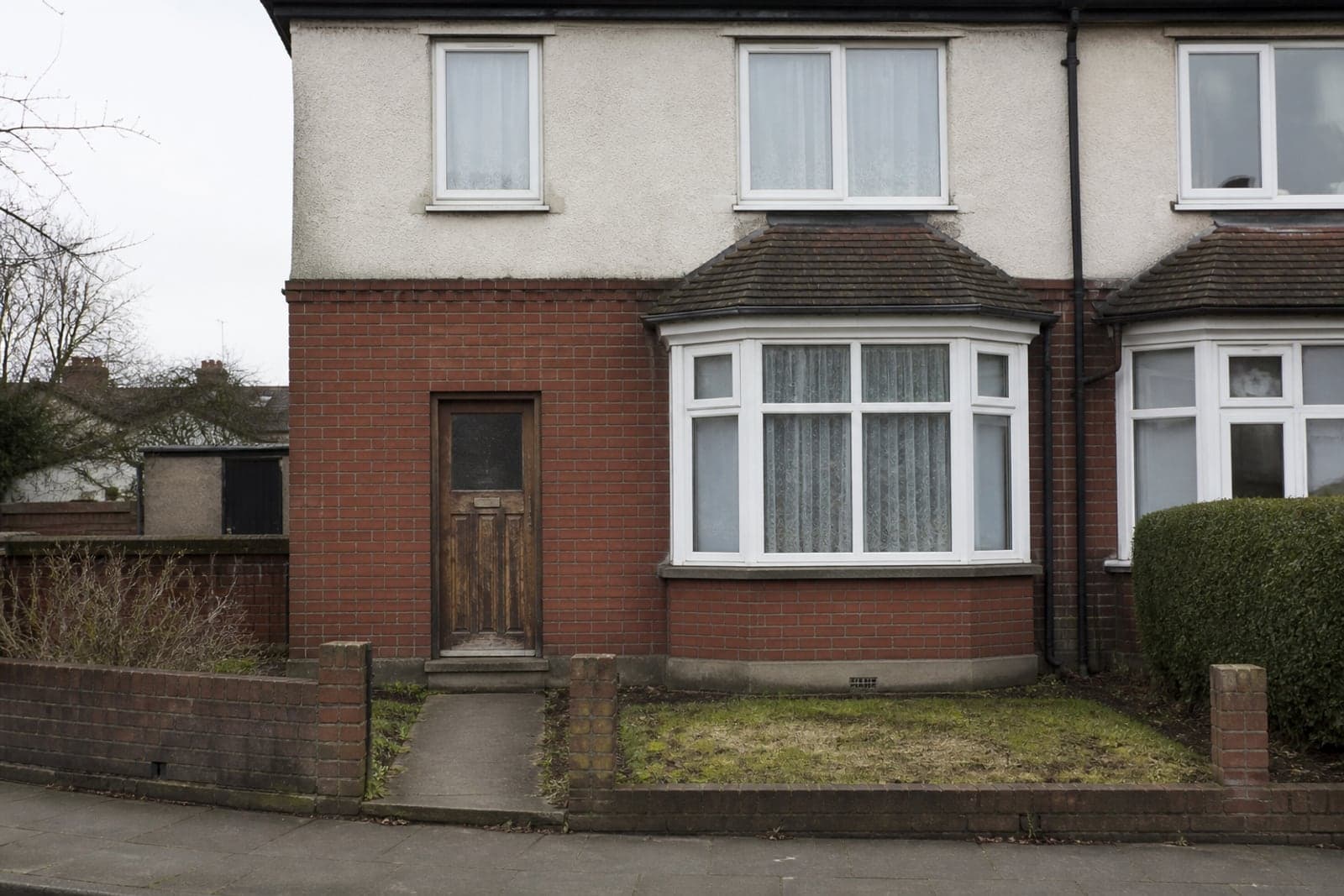 TodayHartley in Chartwell Green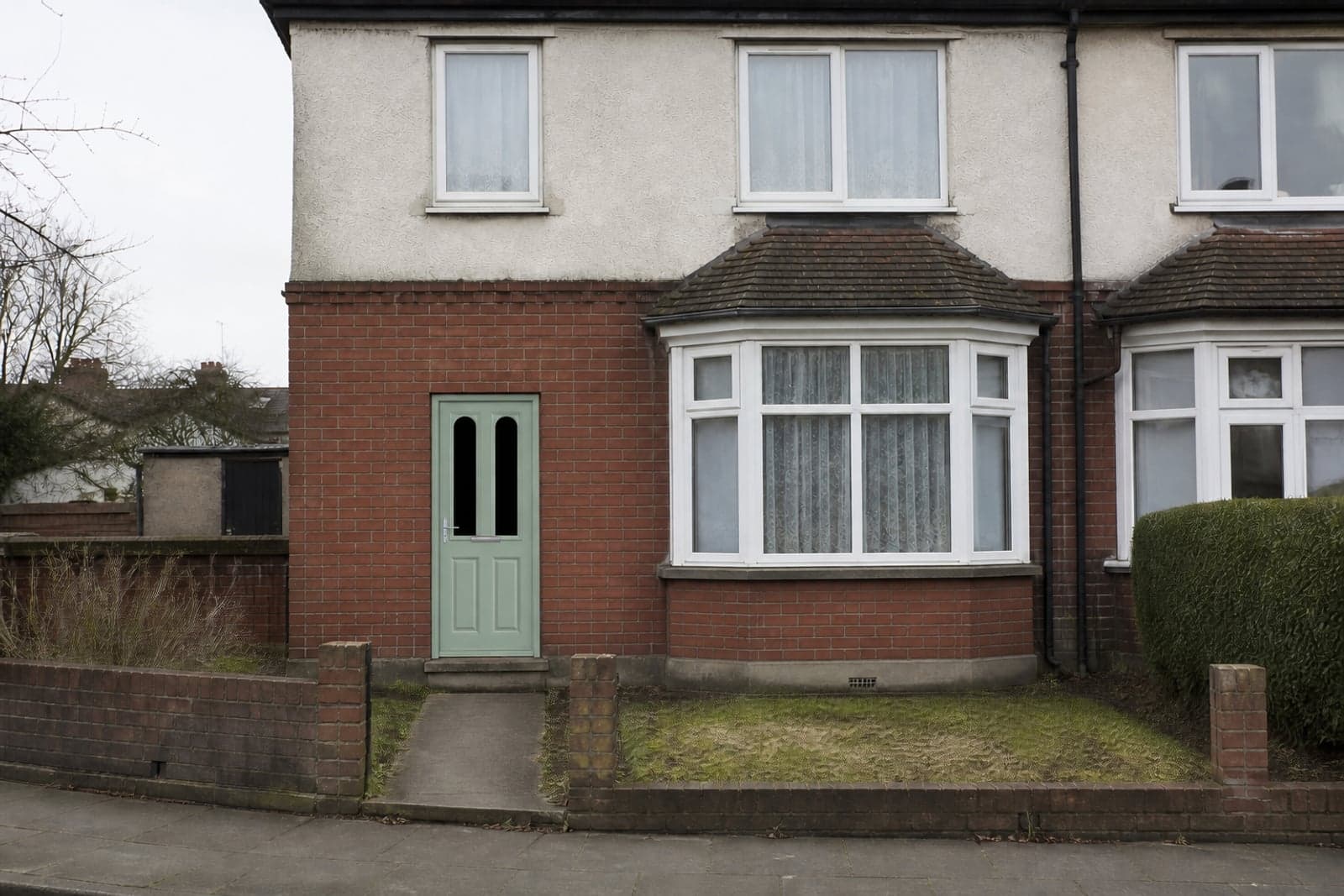
Bramfield in Cream
Chalky peeling paint on a door that opens straight onto the lane. Cream keeps it quiet against the stone, which a strong colour would not, and the two small lights sit high enough to keep the hall private from the pavement.
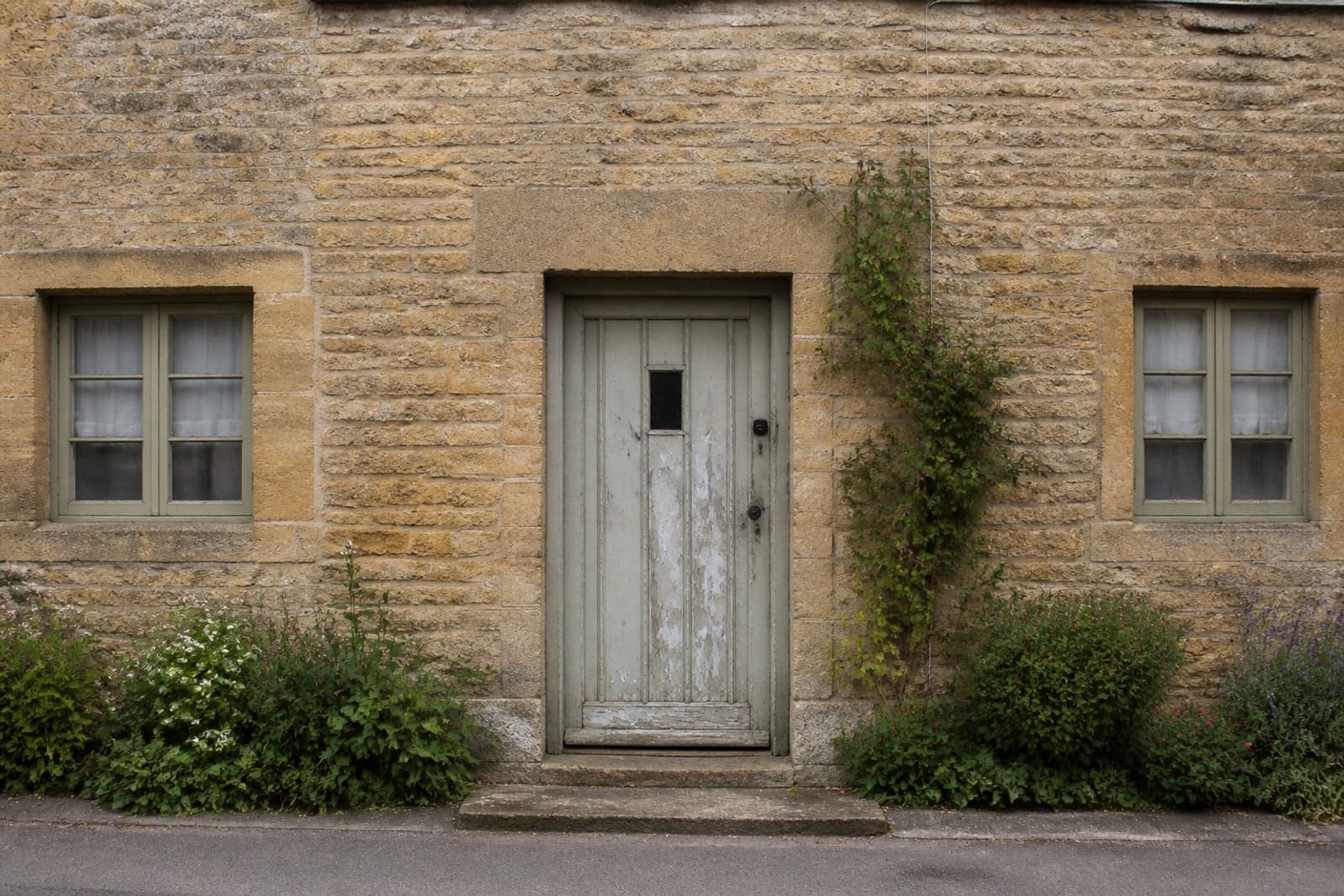 TodayBramfield in Cream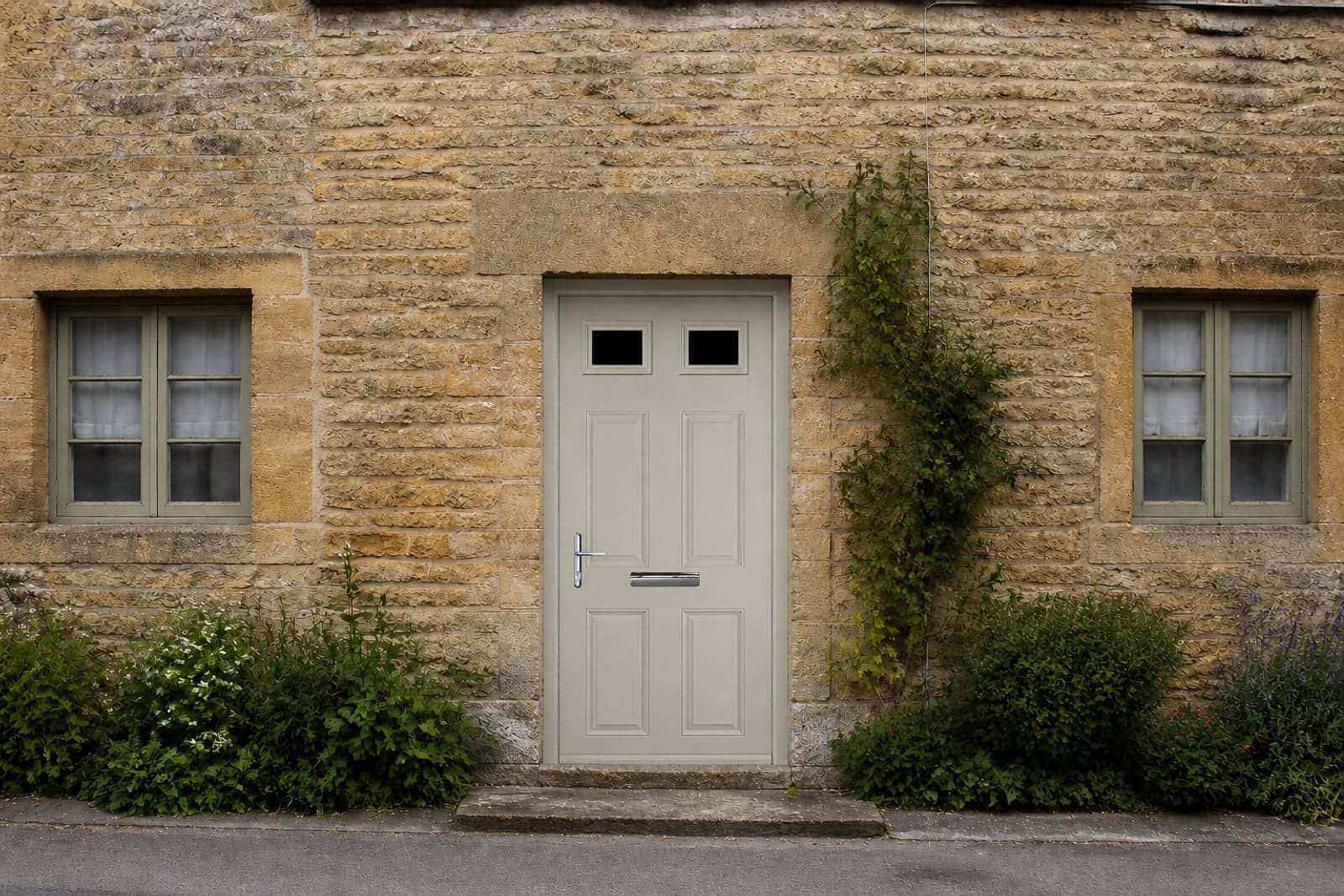
Ridgeway in Agate Grey
A brown-framed door with a big panel of patterned obscure glass, which is the detail that dates the whole frontage. Grey and plain is the usual fix and it is usual because it works.
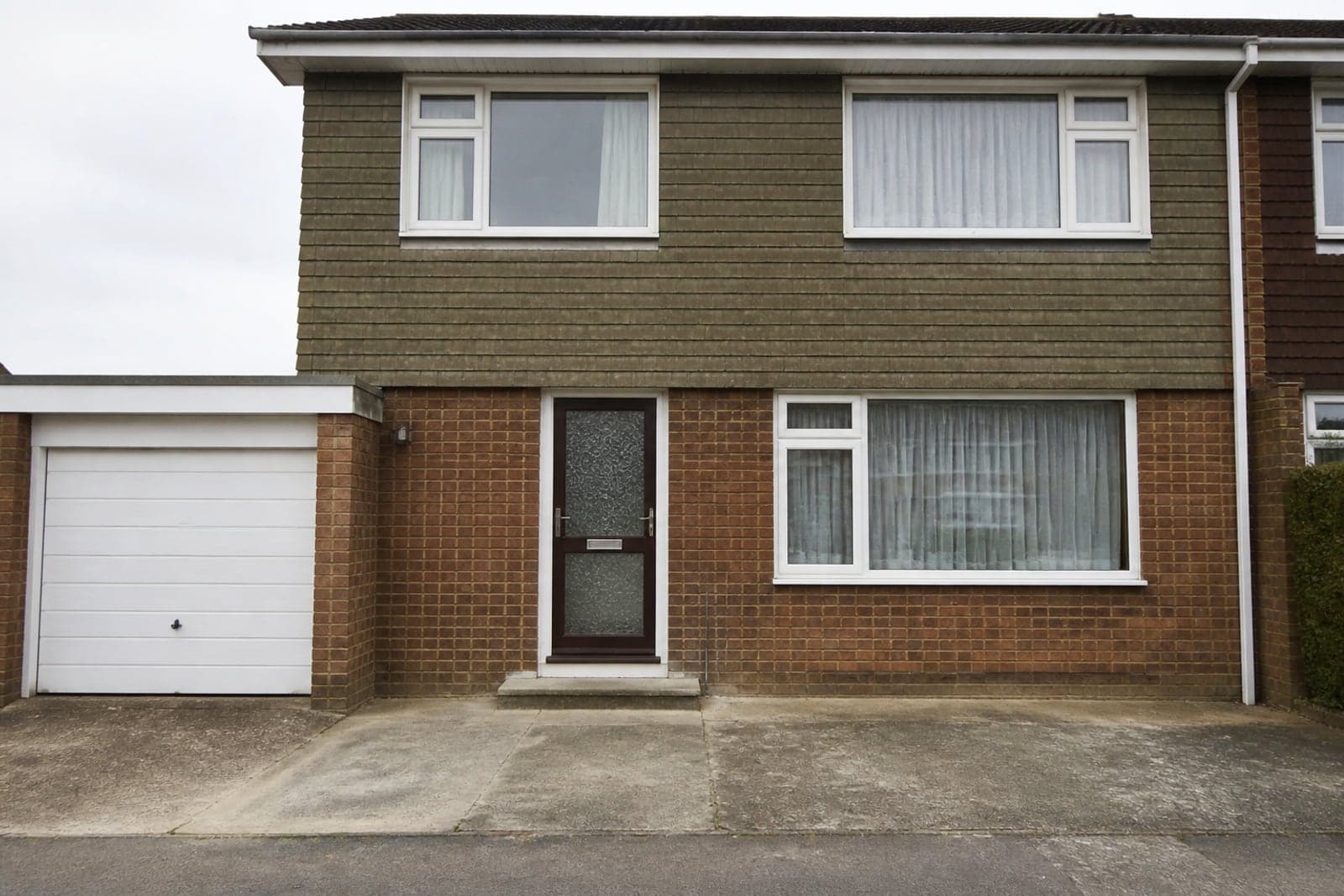 TodayRidgeway in Agate Grey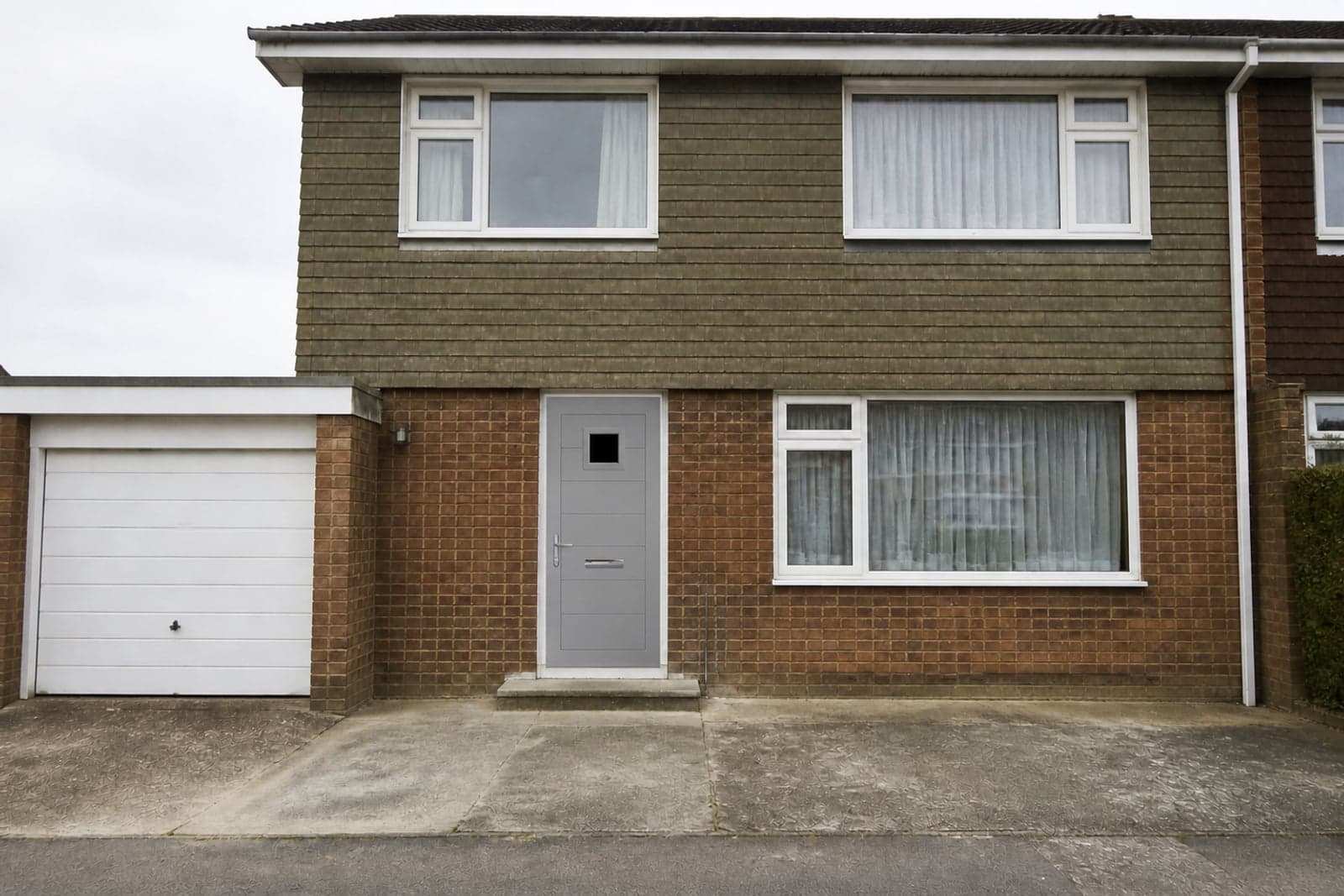
Try it on yours.
Pick a door, set it up how you want it, then upload a photograph of the front as it stands. You get this back on your own house in seconds. Nothing to pay and nothing to book.